
<div class="content_type content_type_0002" data-content-type="content_type_0002" data-w-e-type="contenttype" justify-type="center" style="text-indent: 0px; text-align: center;">
观沧海 壮秋声
</div>
<div class="content_type content_type_0005" data-content-type="content_type_0005" data-w-e-type="contenttype" justify-type="center" style="text-indent: 0px; text-align: center;">
□王红利
</div>
<div>
<img id="paperImg" style="max-width: 100%;height: auto" src="https://img.founderfx.cn/epaper/202611/29/019e2c3967dd41808960f6cdd3a95a13/3.jpg" alt="" class="page-img">
</div>
<div class="content_type content_type_0005" data-content-type="content_type_0005" data-w-e-type="contenttype" justify-type="" style="text-indent: 0px;">
秦皇岛日报 2026-11-29
</div>
<div class="content_type content_type_0006" data-content-type="content_type_0006" data-w-e-type="contenttype" justify-type="right" style="text-indent: 0px; text-align: right;">
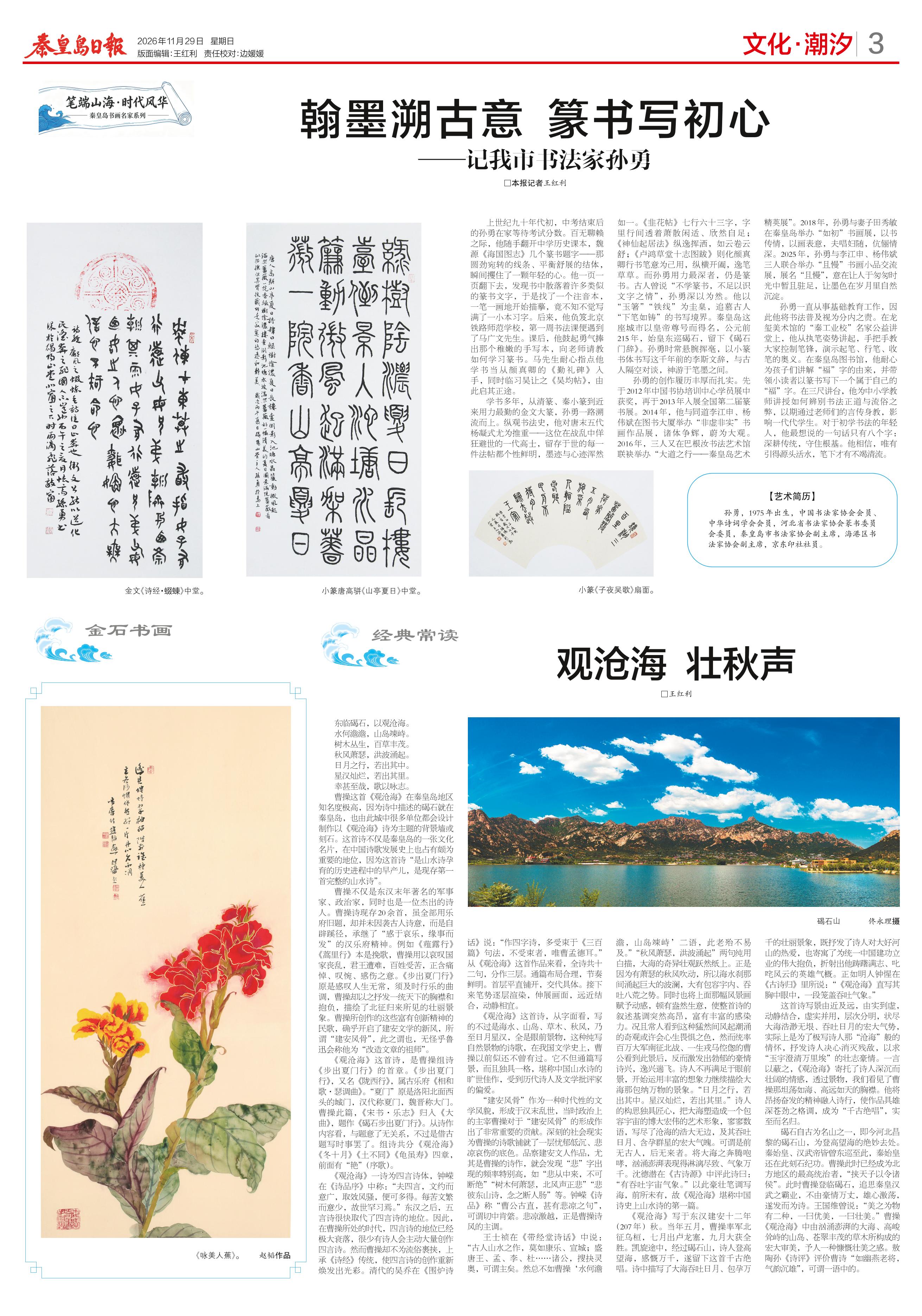
<img src="//img.founderfx.cn/epaper/202611/29/019e2c3967dd41808960f6cdd3a95a13/03/5608953_wbzt_1785136044444_s.jpg" alt="" data-href="//img.founderfx.cn/epaper/202611/29/019e2c3967dd41808960f6cdd3a95a13/03/5608953_wbzt_1785136044444_s.jpg" style="">碣石山 佟永理摄
</div>
<div class="content_type content_type_0007" data-content-type="content_type_0007" data-w-e-type="contenttype" justify-type="" style="text-indent: 2em;"></div>
<div class="content_type content_type_0007" data-content-type="content_type_0007" data-w-e-type="contenttype" justify-type="" style="text-indent: 2em;">
东临碣石,以观沧海。
</div>
<div class="content_type content_type_0007" data-content-type="content_type_0007" data-w-e-type="contenttype" justify-type="" style="text-indent: 2em;">
水何澹澹,山岛竦峙。
</div>
<div class="content_type content_type_0007" data-content-type="content_type_0007" data-w-e-type="contenttype" justify-type="" style="text-indent: 2em;">
树木丛生,百草丰茂。
</div>
<div class="content_type content_type_0007" data-content-type="content_type_0007" data-w-e-type="contenttype" justify-type="" style="text-indent: 2em;">
秋风萧瑟,洪波涌起。
</div>
<div class="content_type content_type_0007" data-content-type="content_type_0007" data-w-e-type="contenttype" justify-type="" style="text-indent: 2em;">
日月之行,若出其中。
</div>
<div class="content_type content_type_0007" data-content-type="content_type_0007" data-w-e-type="contenttype" justify-type="" style="text-indent: 2em;">
星汉灿烂,若出其里。
</div>
<div class="content_type content_type_0007" data-content-type="content_type_0007" data-w-e-type="contenttype" justify-type="" style="text-indent: 2em;">
幸甚至哉,歌以咏志。
</div>
<div class="content_type content_type_0007" data-content-type="content_type_0007" data-w-e-type="contenttype" justify-type="" style="text-indent: 2em;">
曹操这首《观沧海》在秦皇岛地区知名度极高,因为诗中描述的碣石就在秦皇岛,也由此城中很多单位都会设计制作以《观沧海》诗为主题的背景墙或刻石。这首诗不仅是秦皇岛的一张文化名片,在中国诗歌发展史上也占有颇为重要的地位,因为这首诗“是山水诗孕育的历史进程中的早产儿,是现存第一首完整的山水诗”。
</div>
<div class="content_type content_type_0007" data-content-type="content_type_0007" data-w-e-type="contenttype" justify-type="" style="text-indent: 2em;">
曹操不仅是东汉末年著名的军事家、政治家,同时也是一位杰出的诗人。曹操诗现存20余首,虽全部用乐府旧题,却并未因袭古人诗意,而是自辟蹊径,承继了“感于哀乐,缘事而发”的汉乐府精神。例如《薤露行》《蒿里行》本是挽歌,曹操用以哀叹国家丧乱,君王遭难,百姓受苦,正含痛悼、叹惋、感伤之意。《步出夏门行》原是感叹人生无常,须及时行乐的曲调,曹操却以之抒发一统天下的胸襟和抱负,描绘了北征归来所见的壮丽景象。曹操所创作的这些富有创新精神的民歌,确乎开启了建安文学的新风,所谓“建安风骨”,此之谓也,无怪乎鲁迅会称他为“改造文章的祖师”。
</div>
<div class="content_type content_type_0007" data-content-type="content_type_0007" data-w-e-type="contenttype" justify-type="" style="text-indent: 2em;">
《观沧海》这首诗,是曹操组诗《步出夏门行》的首章。《步出夏门行》,又名《陇西行》,属古乐府《相和歌·瑟调曲》。“夏门”原是洛阳北面西头的城门,汉代称夏门,魏晋称大门。曹操此篇,《宋书·乐志》归入《大曲》,题作《碣石步出夏门行》。从诗作内容看,与题意了无关系,不过是借古题写时事罢了。组诗共分《观沧海》《冬十月》《土不同》《龟虽寿》四章,前面有“艳”(序歌)。
</div>
<div class="content_type content_type_0007" data-content-type="content_type_0007" data-w-e-type="contenttype" justify-type="" style="text-indent: 2em;">
《观沧海》一诗为四言诗体,钟嵘在《诗品序》中称:“夫四言,文约而意广,取效风骚,便可多得。每苦文繁而意少,故世罕习焉。”东汉之后,五言诗很快取代了四言诗的地位。因此,在曹操所处的时代,四言诗的地位已经极大衰落,很少有诗人会主动大量创作四言诗。然而曹操却不为流俗裹挟,上承《诗经》传统,使四言诗的创作重新焕发出光彩。清代的吴乔在《围炉诗话》说:“作四字诗,多受束于《三百篇》句法,不受束者,唯曹孟德耳。”从《观沧海》这首作品来看,全诗共十二句,分作三层。通篇布局合理,节奏鲜明。首层平直铺开,交代具体。接下来笔势逐层渲染,伸展画面,远近结合,动静相宜。
</div>
<div class="content_type content_type_0007" data-content-type="content_type_0007" data-w-e-type="contenttype" justify-type="" style="text-indent: 2em;">
《观沧海》这首诗,从字面看,写的不过是海水、山岛、草木、秋风,乃至日月星汉,全是眼前景物,这种纯写自然景物的诗歌,在我国文学史上,曹操以前似还不曾有过。它不但通篇写景,而且独具一格,堪称中国山水诗的旷世佳作,受到历代诗人及文学批评家的偏爱。
</div>
<div class="content_type content_type_0007" data-content-type="content_type_0007" data-w-e-type="contenttype" justify-type="" style="text-indent: 2em;">
“建安风骨”作为一种时代性的文学风貌,形成于汉末乱世,当时政治上的主宰曹操对于“建安风骨”的形成作出了非常重要的贡献。深刻的社会现实为曹操的诗歌铺就了一层忧郁低沉、悲凉哀伤的底色。品察建安文人作品,尤其是曹操的诗作,就会发现“悲”字出现的频率特别高,如“悲从中来,不可断绝”“树木何萧瑟,北风声正悲”“悲彼东山诗,念之断人肠”等。钟嵘《诗品》称“曹公古直,甚有悲凉之句”,可谓切中肯綮。悲凉激越,正是曹操诗风的主调。
</div>
<div class="content_type content_type_0007" data-content-type="content_type_0007" data-w-e-type="contenttype" justify-type="" style="text-indent: 2em;">
王士祯在《带经堂诗话》中说:“古人山水之作,莫如康乐、宣城;盛唐王、孟、李、杜……诸公,搜抉灵奥,可谓主矣。然总不如曹操‘水何澹澹,山岛竦峙’二语,此老殆不易及。”“秋风萧瑟,洪波涌起”两句纯用白描,大海的奇异壮观跃然纸上。正是因为有萧瑟的秋风吹动,所以海水刹那间涌起巨大的波澜,大有包容宇内、吞吐八荒之势。同时也将上面那幅风景画赋予动感,顿有盎然生意,使整首诗的叙述基调突然高昂,富有丰富的感染力。况且常人看到这种猛然间风起潮涌的奇观或许会心生畏惧之色,然而统率百万大军南征北战、一生戎马倥偬的曹公看到此景后,反而激发出勃郁的豪情诗兴,逸兴遄飞。诗人不再满足于眼前景,开始运用丰富的想象力继续描绘大海那包纳万物的景象。“日月之行,若出其中。星汉灿烂,若出其里。”诗人的构思独具匠心,把大海塑造成一个包容宇宙的博大宏伟的艺术形象,寥寥数语,写尽了沧海的浩大无边,及其吞吐日月、含孕群星的宏大气魄。可谓是前无古人,后无来者。将大海之奔腾咆哮,汹涌澎湃表现得淋漓尽致、气象万千。沈德潜在《古诗源》中评此诗曰:“有吞吐宇宙气象。”以此豪壮笔调写海,前所未有,故《观沧海》堪称中国诗史上山水诗的第一篇。
</div>
<div class="content_type content_type_0007" data-content-type="content_type_0007" data-w-e-type="contenttype" justify-type="" style="text-indent: 2em;">
《观沧海》写于东汉建安十二年(207年)秋。当年五月,曹操率军北征乌桓,七月出卢龙塞,九月大获全胜。凯旋途中,经过碣石山,诗人登高望海,感慨万千,遂留下这首千古绝唱。诗中描写了大海吞吐日月、包孕万千的壮丽景象,既抒发了诗人对大好河山的热爱,也寄寓了为统一中国建功立业的伟大抱负,折射出他踌躇满志、叱咤风云的英雄气概。正如明人钟惺在《古诗归》里所说:“《观沧海》直写其胸中眼中,一段笼盖吞吐气象。”
</div>
<div class="content_type content_type_0007" data-content-type="content_type_0007" data-w-e-type="contenttype" justify-type="" style="text-indent: 2em;">
这首诗写景由近及远,由实到虚,动静结合,虚实并用,层次分明,状尽大海浩渺无垠、吞吐日月的宏大气势,实际上是为了极写诗人那“沧海”般的情怀,抒发诗人决心消灭残敌,以求“玉宇澄清万里埃”的壮志豪情。一言以蔽之,《观沧海》寄托了诗人深沉而壮阔的情感,透过景物,我们看见了曹操那坦荡如海、高远如天的胸襟。他将昂扬奋发的精神融入诗行,使作品具雄深苍劲之格调,成为“千古绝唱”,实至而名归。
</div>
<div class="content_type content_type_0007" data-content-type="content_type_0007" data-w-e-type="contenttype" justify-type="" style="text-indent: 2em;">
碣石自古为名山之一,即今河北昌黎的碣石山,为登高望海的绝妙去处。秦始皇、汉武帝皆曾东巡至此,秦始皇还在此刻石纪功。曹操此时已经成为北方地区的最高统治者,“挟天子以令诸侯”。此时曹操登临碣石,追思秦皇汉武之霸业,不由豪情万丈,雄心激荡,遂发而为诗。王国维曾说:“美之为物有二种,一曰优美,一曰壮美。”曹操《观沧海》中由汹涌澎湃的大海、高峻耸峙的山岛、苍翠丰茂的草木所构成的宏大审美,予人一种慷慨壮美之感。敖陶孙《诗评》评价曹诗“如幽燕老将,气韵沉雄”,可谓一语中的。
</div>