
<div class="content_type content_type_0002" data-content-type="content_type_0002" data-w-e-type="contenttype" justify-type="center" style="text-indent: 0px; text-align: center;">
卢龙的时光之河
</div>
<div class="content_type content_type_0005" data-content-type="content_type_0005" data-w-e-type="contenttype" justify-type="center" style="text-indent: 0px; text-align: center;">
□邓存波
</div>
<div>
<img id="paperImg" style="max-width: 100%;height: auto" src="https://img.founderfx.cn/epaper/202609/19/1680849e788f4f40b24f24951305b33e/4.jpg" alt="" class="page-img">
</div>
<div class="content_type content_type_0005" data-content-type="content_type_0005" data-w-e-type="contenttype" justify-type="" style="text-indent: 0px;">
秦皇岛日报 2026-09-19
</div>
<div class="content_type content_type_0006" data-content-type="content_type_0006" data-w-e-type="contenttype" justify-type="right" style="text-indent: 0px; text-align: right;">
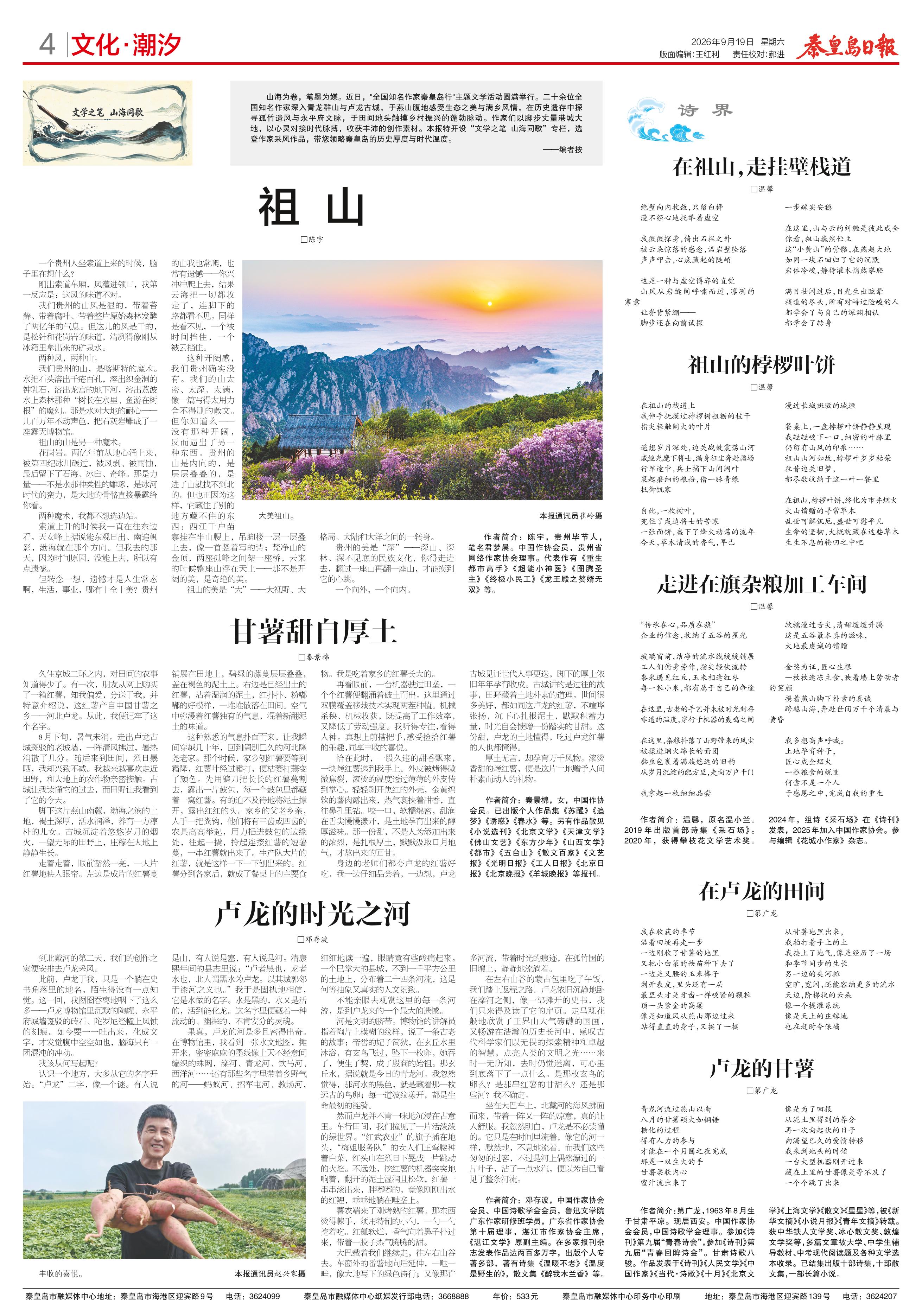
<img src="//img.founderfx.cn/epaper/202609/19/1680849e788f4f40b24f24951305b33e/04/5767396_wbzt_1789542859655_s.jpg" alt="" data-href="//img.founderfx.cn/epaper/202609/19/1680849e788f4f40b24f24951305b33e/04/5767396_wbzt_1789542859655_s.jpg" style="">丰收的喜悦。 <strong>本报通讯员</strong>赵兴家<strong>摄</strong>
</div>
<div class="content_type content_type_0007" data-content-type="content_type_0007" data-w-e-type="contenttype" justify-type="" style="text-indent: 2em;"></div>
<div class="content_type content_type_0007" data-content-type="content_type_0007" data-w-e-type="contenttype" justify-type="" style="text-indent: 2em;">
到北戴河的第二天,我们的创作之家便安排去卢龙采风。
</div>
<div class="content_type content_type_0007" data-content-type="content_type_0007" data-w-e-type="contenttype" justify-type="" style="text-indent: 2em;">
此前,卢龙于我,只是一个躺在史书角落里的地名,陌生得没有一点知觉。这一回,我囫囵吞枣地咽下了这么多——卢龙博物馆里沉默的陶罐、永平府城墙斑驳的砖石、陀罗尼经幢上风蚀的刻痕。如今要一一吐出来,化成文字,才发觉腹中空空如也,脑海只有一团混沌的冲动。
</div>
<div class="content_type content_type_0007" data-content-type="content_type_0007" data-w-e-type="contenttype" justify-type="" style="text-indent: 2em;">
我该从何写起呢?
</div>
<div class="content_type content_type_0007" data-content-type="content_type_0007" data-w-e-type="contenttype" justify-type="" style="text-indent: 2em;">
认识一个地方,大多从它的名字开始。“卢龙”二字,像一个谜。有人说是山,有人说是塞,有人说是河。清康熙年间的县志里说:“卢者黑也,龙者水也,北人谓黑水为卢龙。以其城郭邻于漆河之义也。”我于是固执地相信,它是水做的名字。水是黑的,水又是活的,活到能化龙。这名字里便藏着一种流动的、幽深的、不肯安分的灵魂。
</div>
<div class="content_type content_type_0007" data-content-type="content_type_0007" data-w-e-type="contenttype" justify-type="" style="text-indent: 2em;">
果真,卢龙的河是多且密得出奇。在博物馆里,我看到一张水文地图,摊开来,密密麻麻的墨线像上天不经意间编织的蛛网,滦河、青龙河、饮马河、西洋河……还有那些名字里带着乡野气的河——蚂蚁河、招军屯河、教场河,细细地读一遍,眼睛竟有些酸痛起来。一个巴掌大的县城,不到一千平方公里的土地上,分布着二十四条河流,这是何等抽象又真实的人文景致。
</div>
<div class="content_type content_type_0007" data-content-type="content_type_0007" data-w-e-type="contenttype" justify-type="" style="text-indent: 2em;">
不能亲眼去观赏这里的每一条河流,是到户龙来的一个最大的遗憾。
</div>
<div class="content_type content_type_0007" data-content-type="content_type_0007" data-w-e-type="contenttype" justify-type="" style="text-indent: 2em;">
河是文明的脐带。博物馆的讲解员指着陶片上模糊的纹样,说了一条古老的故事:帝喾的妃子简狄,在玄丘水里沐浴,有玄鸟飞过,坠下一枚卵,她吞了,便生了契,成了殷商的始祖。那玄丘水,据说就是今日的青龙河。我忽然觉得,那河水的黑色,就是藏着那一枚远古的鸟卵;每一道波纹漾开,都是生命最初的涟漪。
</div>
<div class="content_type content_type_0007" data-content-type="content_type_0007" data-w-e-type="contenttype" justify-type="" style="text-indent: 2em;">
然而卢龙并不肯一味地沉浸在古意里。车行田间,我们撞见了一片活泼泼的绿世界。“红武农业”的旗子插在地头,“梅姐服务队”的女人们正弯腰种着白菜,红头巾在烈日下晃成一片跳动的火焰。不远处,挖红薯的机器突突地响着,翻开的泥土湿润且松软,红薯一串串滚出来,胖嘟嘟的,竟像刚刚出水的红鲤,乖乖地躺在畦垄上。
</div>
<div class="content_type content_type_0007" data-content-type="content_type_0007" data-w-e-type="contenttype" justify-type="" style="text-indent: 2em;">
薯农端来了刚烤熟的红薯。那东西烫得棘手,须用特制的小勺,一勺一勺挖着吃。红瓤软烂,香气向着鼻子扑过来,带着一股子热气腾腾的甜。
</div>
<div class="content_type content_type_0007" data-content-type="content_type_0007" data-w-e-type="contenttype" justify-type="" style="text-indent: 2em;">
大巴载着我们继续走,往左右山谷去。车窗外的番薯地向后延伸,一畦一畦,像大地写下的绿色诗行;又像那许多河流,带着时光的痕迹,在孤竹国的旧壤上,静静地流淌着。
</div>
<div class="content_type content_type_0007" data-content-type="content_type_0007" data-w-e-type="contenttype" justify-type="" style="text-indent: 2em;">
在左右山谷的蒙古包里吃了午饭,我们踏上返程之路。卢龙依旧沉静地卧在滦河之侧,像一部摊开的史书,我们只来得及读了它的扉页。走马观花般地欣赏了王界山大气磅礴的国画,又畅游在浩瀚的历史长河中,感叹古代科学家们以无畏的探索精神和卓越的智慧,点亮人类的文明之光……来时一无所知,去时仍觉迷离,可心里到底落下了一点什么。是那枚玄鸟的卵么?是那串红薯的甘甜么?还是那些河?我不确定。
</div>
<div class="content_type content_type_0007" data-content-type="content_type_0007" data-w-e-type="contenttype" justify-type="" style="text-indent: 2em;">
坐在大巴车上,北戴河的海风拂面而来,带着一阵又一阵的凉意,真的让人舒服。我忽然明白,卢龙是不必读懂的。它只是在时间里流着,像它的河一样,默然地,不息地流着。而我们这些匆匆的过客,不过是河上偶然漂过的一片叶子,沾了一点水汽,便以为自己看见了整条河流。
</div>
<div class="content_type content_type_0007" data-content-type="content_type_0007" data-w-e-type="contenttype" justify-type="" style="text-indent: 2em;"></div>
<div class="content_type content_type_0007" data-content-type="content_type_0007" data-w-e-type="contenttype" justify-type="" style="text-indent: 2em;">
<strong>作者简介:邓存波,中国作家协会会员、中国诗歌学会会员,鲁迅文学院广东作家研修班学员,广东省作家协会第十届理事,湛江市作家协会主席,《湛江文学》原副主编。在多家报刊杂志发表作品达两百多万字,出版个人专著多部,著有诗集《温暖不老》《温度是野生的》,散文集《醉我木兰香》等。</strong>
</div>